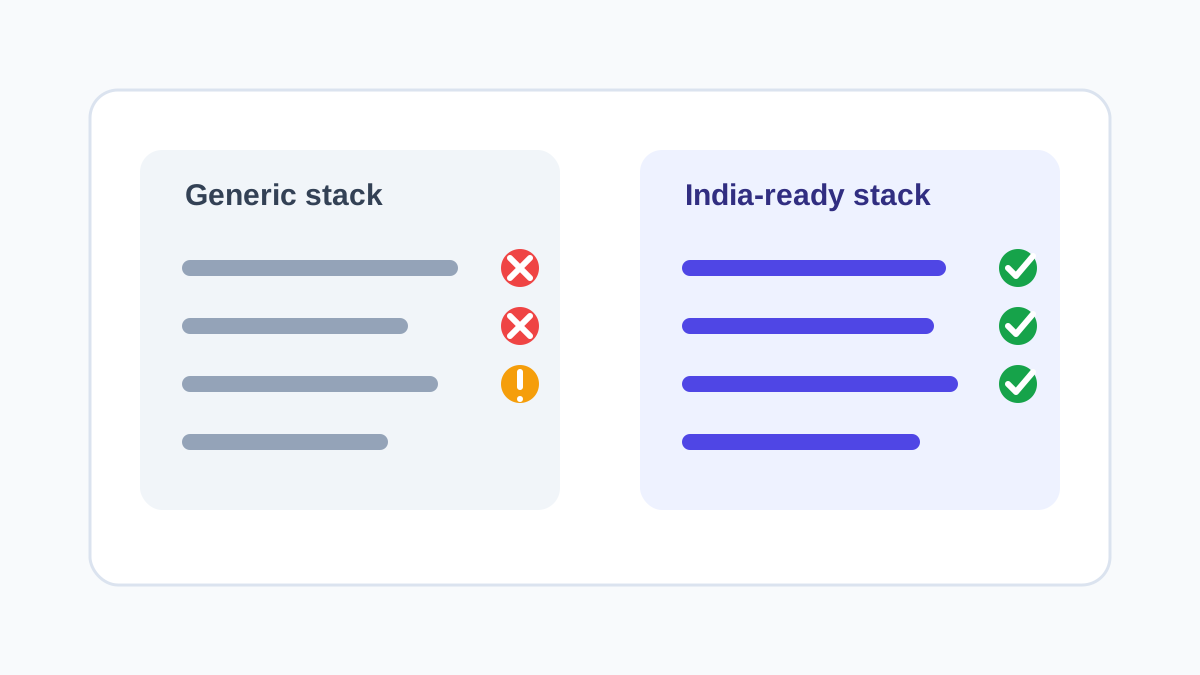
“Shopify alternative India” is a high-intent search because the buyer already knows the category. They are not asking what ecommerce is. They are asking which platform fits their market, payment stack, costs, and growth plan.
Here are the criteria that matter.
Pricing and transaction fees
Subscription price is only one part of the cost. Check whether the platform adds its own transaction fee on top of the payment gateway fee.
For Indian stores, even 1% to 2% extra can become expensive as sales grow. A platform with 0% added transaction fees lets you pay Razorpay or PayU directly without another platform cut.
UPI and local checkout
UPI should be visible and reliable at checkout. It should not feel like an afterthought behind card forms. Look for:
- UPI, cards, netbanking, and wallets
- Razorpay or PayU support
- Payment webhook handling
- Refunds to original payment method
- Reconciliation between gateway and orders
Checkout is where platform differences become revenue differences.
Custom domains and SSL
A serious store needs a custom domain with managed SSL. The platform should make DNS setup simple, renew certificates automatically, and support branded email authentication where possible.
This affects trust, deliverability, and search.
SEO foundations
Before buying SEO apps, check the basics:
- Server-rendered pages
- Editable titles and descriptions
- Automatic XML sitemap
- Canonical URLs
- Product and breadcrumb structured data
- Image optimization
- Fast mobile pages
- Crawlable policy and help pages
If the platform does not provide these, content alone will have to work harder.
Product types
Some stores sell physical products only. Others need digital downloads, event tickets, appointments, gift cards, or bundles. A Shopify alternative should match the product model you are building, not force everything through plugins.
Analytics and marketing
A platform should show which channels create orders, which products convert, and which customers are worth retaining. Look for abandoned checkout recovery, customer segments, email tools, conversion analytics, and simple campaign tracking.
Support and ownership
Choose a platform where you can own your domain, export important data, and get clear support on payments, storefronts, and launch issues. Low setup friction is useful only if the store remains easy to operate after launch.
A fair comparison framework
Use this checklist when comparing platforms:
- Total monthly cost at your expected order volume
- Extra transaction fees
- UPI, Razorpay, and PayU support
- Custom domain and SSL
- Product types supported natively
- SEO features included
- Analytics and marketing tools
- Support quality and migration options
The best Shopify alternative is not the one with the longest feature list. It is the one that fits your market, cost structure, and operating rhythm.
Start your online business today.
Put the guide into practice on Sellerlane.
Build a fast storefront, connect Razorpay or PayU, publish SEO-ready pages, and keep 0% added transaction fees.
Start your free store